

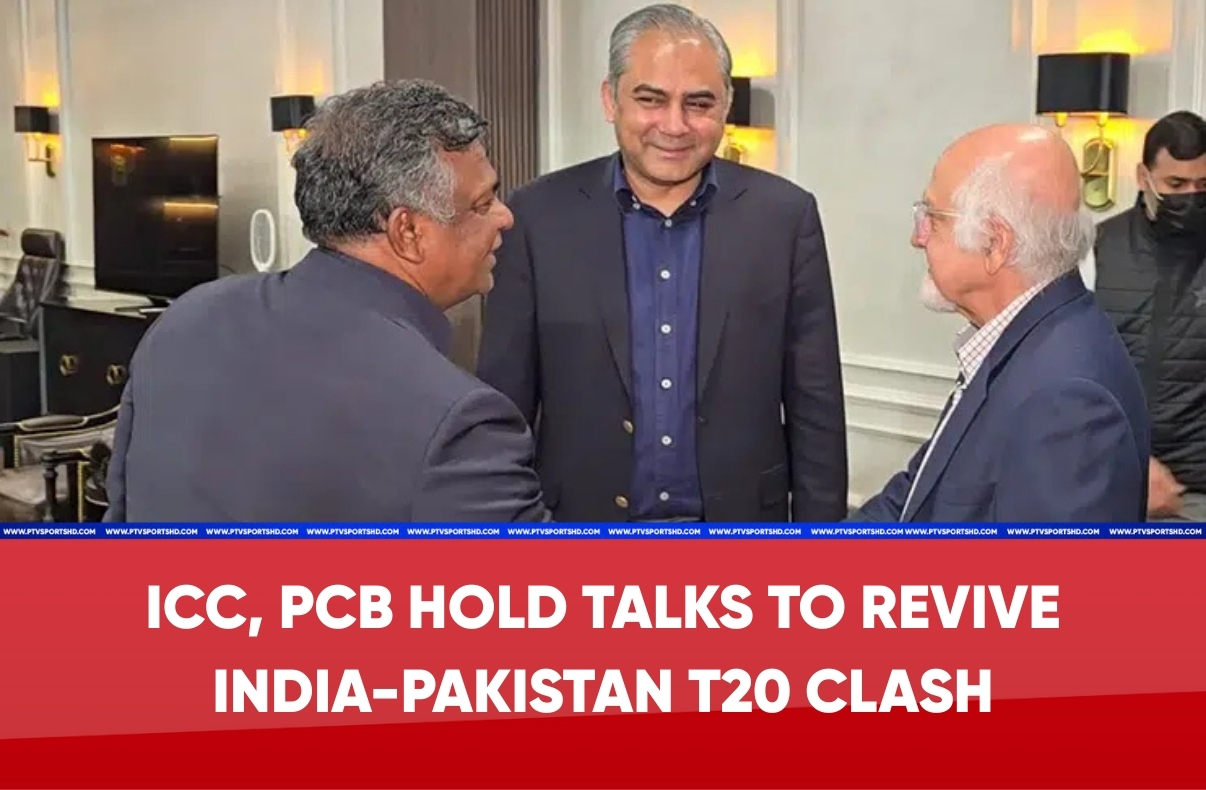
LAHORE: Senior officials from the International Cricket Council (ICC) and the Pakistan Cricket Board (PCB) are holding crucial discussions in Lahore on Sunday in a renewed effort to revive the highly anticipated Pakistan-India clash in the ICC T20 World Cup 2026.
Sources familiar with the matter say the ongoing talks could play a decisive role not only in determining the fate of the marquee encounter but also in shaping how politically sensitive fixtures are managed in future global tournaments. The match, scheduled for February 15 in Colombo, remains uncertain following directives issued by the Government of Pakistan advising its team not to take the field against India.
The ICC delegation, led by Deputy Chairman Imran Khwaja, arrived in Lahore on Sunday evening. According to insiders, Khwaja has been entrusted with the responsibility of engaging PCB leadership in constructive dialogue, with the ICC keen to find middle ground that allows the tournament’s most lucrative fixture to go ahead as planned.
The governing body is reportedly concerned about the broader implications of a Pakistan-India no-show, given the commercial, competitive, and global interest attached to the rivalry. Broadcasters, sponsors, and fans worldwide consider the clash a cornerstone of ICC events.
In parallel, the Emirates Cricket Board (ECB) has also appealed to the PCB to reconsider its position. Sources indicate the ECB has emphasized the long-term interests of international cricket, urging stakeholders to prevent politics from overshadowing the tournament’s integrity and global appeal.
Earlier in the day, Bangladesh Cricket Board (BCB) President Aminul Islam Bulbul held a separate meeting with PCB Chairman Mohsin Naqvi. During the discussion, Aminul Islam expressed appreciation for Pakistan’s support of Bangladesh’s stance during the recent World Cup-related dispute involving India. PCB Chief Executive Officer Salman Naseer and advisor Amir Mir were also present at the meeting.
The current situation stems from a series of politically driven decisions that have already disrupted the tournament’s structure. Bangladesh had earlier declined to play matches in India due to security concerns, a move that resulted in Scotland replacing them in the competition. This development further intensified tensions among participating nations.
Following these events, the Pakistan government instructed its national side to withdraw from the high-profile Group A fixture against co-hosts India. The decision has cast a shadow over the tournament, which features 20 teams and was expected to be one of the most competitive editions in recent history.
Pakistan began their campaign on a positive note with a victory over the Netherlands on February 7. However, forfeiting the India match would see them lose two crucial points and suffer a major setback to their net run rate, significantly denting their chances of progressing further in the competition.
As talks continue, cricketing authorities and fans alike await clarity, hoping diplomacy prevails to ensure the iconic rivalry returns to the world stage.
